
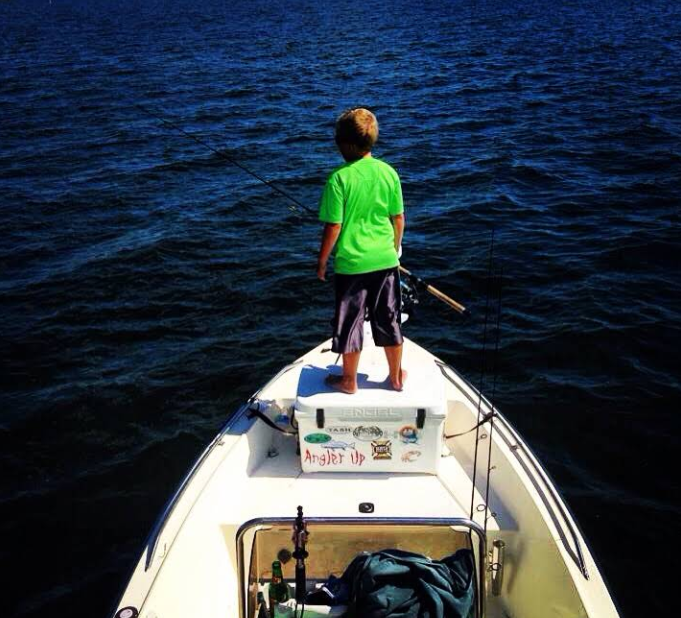
Yes, a complete beginner can go deep-sea fishing here, and the crew handles every technical part of it. The catch is the ride, not the fishing. Navarre Beach has no pass of its own to the Gulf, so any true offshore run starts by heading west toward Pensacola Pass or east toward East Pass at Destin, which puts real boat time between you and the first line in the water.
Showintail Inshore Charters runs private fishing charters in Navarre, FL, launching from Navarre Beach, Pensacola, Gulf Breeze and Fort Walton Beach, so a first-timer can start where the water suits them instead of where the truck happens to be parked. Read the seasickness section below before you book anything long.
What counts as deep sea fishing near Navarre, FL?
The phrase gets used loosely, and the difference matters more here than in most Gulf towns. Deep sea, or offshore, means open Gulf water past the barrier island, where the bottom drops away, and the boat is exposed to swell with nothing between it and the horizon. Nearshore means the strip of Gulf just off the beach, still open water but close enough to run back in quickly. Inshore means the protected side, which around Navarre Beach means Santa Rosa Sound, the bays, and the tidal creeks behind the island.
Geography is what separates the three around here. Santa Rosa Island runs unbroken past Navarre Beach, so the boat ramp at the causeway opens into the Sound and not the Gulf. Getting to blue water means running the Intracoastal west to Pensacola Pass or east to East Pass, and either way that is a meaningful chunk of a half-day trip spent idling and cruising. Plenty of visitors book what they think is a deep-sea trip out of Navarre and are surprised to learn the boat leaves from somewhere else entirely, which is why we are direct about launch points before anyone pays a deposit.
Does a beginner need any fishing experience?
No, and honestly most of the people we put on fish for the first time have never held a saltwater rod. Offshore fishing asks less skill of a guest than inshore sight-fishing does. The captain finds the structure, sets the drift, rigs the baits, and hands you a rod that is already working. Your job is to hold on, keep the rod tip up and crank when you are told to crank.
What does take getting used to is the physical side. A big fish in deep water pulls for a long time, and fighting one from a moving deck uses muscles that office work does not. Kids and smaller adults often need a belt or a hand on the rod, and there is nothing embarrassing about that. We coach through it in plain language, because a private boat means we are not splitting attention across three other groups who paid for their own seats.
How bad is seasickness on a first offshore trip?
This is the question that decides most first trips, and the honest answer is that it depends on the person and the day. Open Gulf water moves in a slow, rolling way that is nothing like the chop inside the Sound. Someone who has been fine on a ferry or a lake boat can still turn green two hours into a swell. There is no way to know for certain until you are out there.
A few things reliably help. Take a non-drowsy motion sickness tablet the night before and again in the morning, rather than waiting until you feel it, because once it starts nothing taken by mouth works well. Eat something plain beforehand and keep drinking water, since an empty stomach and dehydration both make it worse. Stay on deck where you can see the horizon instead of going below or staring at a phone. If you already know you are prone to it, say so when you book, and we will talk you toward calmer water rather than sell you a trip you will spend hunched over the gunwale.
Which trip length works best for a first timer?
Trip length is a question about tolerance, not ambition. A long day sounds appealing when you are booking from a hotel room in March and feels a lot different at hour six with the sun straight overhead. Most first-timers get a better day out of a shorter, closer trip than a long offshore run, and they usually catch more fish doing it.
Here is how the options compare for someone who has never fished saltwater.
| Trip | Water | Time Before First Cast | Best for a Beginner |
|---|---|---|---|
| 2-hour kids trip, from $300 | Santa Rosa Sound | Minutes | Children under 10, first rod ever |
| 3-hour family trip, from $450 | Sound and bay flats | Minutes | Mixed-age groups, nervous first-timers |
| 4-hour half day, from $550 | Sound, bay, bridge structure | Minutes | Adults wanting a real half-day inshore |
| 8-hour full day, from $950 | Bay, passes, and nearshore Gulf | An hour or more | Fit beginners who know they can handle boats |
The pattern is hard to miss. Every hour spent reaching open water is an hour not spent with a bait in front of a fish, and beginners feel that trade more sharply than experienced anglers do. For a group that genuinely wants the long day and the bigger water, the 8-hour full-day trip is the one built for it.
Not sure which of these fits your group? Tell us who is coming, how old the kids are, and where you are staying, and we will tell you plainly which trip we would put you on, including when the answer is a shorter one than you asked about.
Not sure whether the 4-hour half-day or the full-day trip fits your group?
Call or text Captain Bryant at
850-582-3474
,
and we’ll tell you plainly which one to book.
What a beginner should bring and expect on board
Packing is simpler than most people assume, because the gear side is already handled. Penn rods and reels, live bait, Florida fishing licenses and bottled water on ice come with every fishing charter, and we clean and bag your catch at the dock when you come in. What you bring is sun protection and comfort. A hat, polarized sunglasses, sunscreen and a light long-sleeve shirt do more for a first-timer’s day than any piece of tackle. Closed-toe shoes matter too, since wet decks and flip-flops end badly.
Expect the day to have a rhythm. There is a run out, a stretch of setting up and waiting, bursts of activity when the bite turns on, and a run back. Beginners sometimes read the quiet stretches as a slow day, when that is what fishing looks like between fish. Bring snacks and extra drinks, keep the phone in a dry pocket, and let the captain worry about where the fish are. Knowing what to pack for a charter ahead of time takes most of the nerves out of the morning.
When a beginner is better off fishing inshore
There is a version of this question nobody likes to ask out loud, which is whether deep-sea fishing is the right first trip at all. For a lot of groups, it is not. Families with young children, anyone unsure about motion sickness, and visitors with only a morning to spare tend to have a far better day on protected water. The Sound stays calm when the Gulf is lumpy, the ride out is measured in minutes, and the fish are close enough that a slow start still leaves time to fix it.
Inshore also gives a beginner more shots. Redfish, speckled trout, flounder, sheepshead, black drum, and jack crevalle all live in this system, and a light tackle rod with live bait catches all of them. A kid who lands six fish on a 2-hour trip has a better story than an adult who spent eight hours offshore waiting on one. If you are weighing the two against each other, the difference between inshore and offshore trips lays out what each one asks of you. Whichever way you lean, the decision is easier with someone who fishes this coast every week telling you what the water is doing that week.
Frequently Asked Questions
Can you go deep sea fishing directly from Navarre Beach?
Not without a run to a pass. Santa Rosa Island is unbroken along Navarre Beach, so boats leaving the causeway ramp enter Santa Rosa Sound rather than the Gulf. Reaching open water means heading west to Pensacola Pass or east to East Pass at Destin. That travel time is why we often launch groups from a different city entirely.
Do beginners need a fishing license in Florida?
No. A Florida fishing license is included for every guest on every one of our fishing charters, so nobody needs to buy one separately or bring paperwork. The licensing side is handled before you step on the boat. All harvesting follows current Florida Fish and Wildlife Conservation Commission rules, which the captain manages on the water.
What is the youngest age for a first fishing trip?
There is no hard cutoff, but attention span matters more than age. Children under 10 usually do best on the 2-hour trip, which starts at $300 and stays on calm, protected water. Older kids who have sat through a long car ride without complaint can generally handle a 3-hour or 4-hour trip.
Will we catch anything on a first trip?
Nobody can promise fish, and anyone who does is selling you something. What we can do is put you on water that is producing that week, with live bait and gear that works, and a captain watching the tide. Beginners fishing protected water behind the island tend to catch more often than beginners running offshore.
Contact Us About Your First Trip
Call or text Captain Bryant at 850-582-3474, or email, and tell us what your group looks like. We answer around the clock, seven days a week, and we will point you to the right trip even when that means a shorter one. Trips leave from 1451 Navarre Beach Causeway, Navarre, FL 32566, with launches also running out of Pensacola, Gulf Breeze, and Fort Walton Beach. Booking is open online through FareHarbor whenever you are ready.
Tell us the ages in your party, where you are staying, and how much of the day you want to give up, and we will come back with a specific recommendation rather than a menu. If the forecast looks wrong for the trip you had in mind, we will say so before you pay anything. Groups traveling in peak weeks should reach out early, because the calm early slots go first, and they are the ones worth having.
Related Topics: