
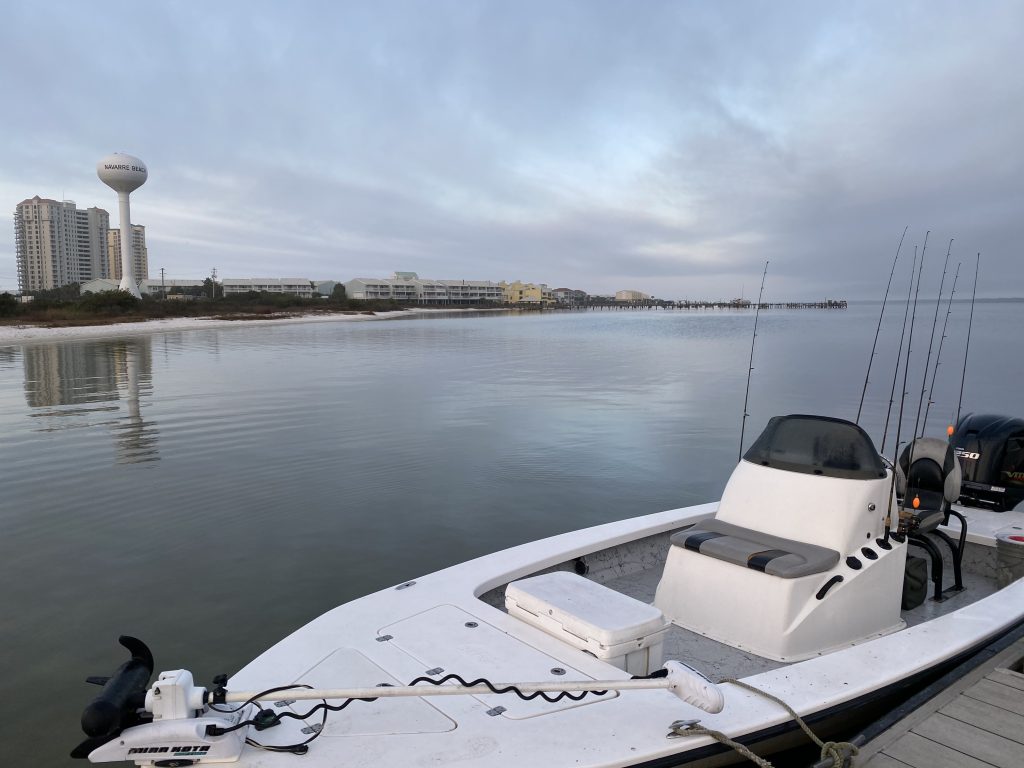
Weather questions come up in almost every pre-trip conversation we have with guests, and they deserve a real answer rather than a blanket reassurance. Wind, water temperature, tidal movement, and rain all change where the fish are and how they’re feeding, and each plays out differently depending on the day. Knowing how these factors work gives guests a clearer picture of what they’re booking, which is part of why so many people look for dependable fishing charters in Navarre, FL before locking in a date.
Santa Rosa Sound, Pensacola Bay, and the other systems we fish across the Panhandle are sheltered by barrier islands and mainland shorelines, so the swells that make open Gulf trips rough on certain days aren’t a factor inshore. The conditions that matter here are different ones, and they affect the fishing rather than the safety of the trip in most circumstances. Here’s what we’re actually watching on any given morning.
Wind Direction and Speed Reshape the Day on the Water
Wind changes an inshore trip more than any other variable. On flat, calm mornings when Santa Rosa Sound goes glassy, sight-fishing for redfish opens up across the shallow grass flats in ways that aren’t possible once the surface breaks up with chop. Those are the mornings that make fly fishing for redfish on the flats practical. Once the wind picks up, surface visibility drops and the approach shifts to methods that don’t depend on clear water.
Wind also moves water and concentrates bait in predictable ways. A south wind creates current and feeding lanes in different spots than a north wind does, and the fish respond accordingly. An experienced captain reads wind direction and adjusts the target area and launch point before leaving the dock. Because we operate out of four launch cities across the Panhandle, we can plan around wind in a way a single-ramp operation can’t. A direction that shuts down the best water near Navarre Beach may leave Pensacola Bay or Blackwater Bay completely fishable from a different launch that same morning.
A direction that shuts down the best water near Navarre Beach may leave Pensacola Bay or Blackwater Bay completely fishable from a different launch that same morning.
Water Temperature Decides Where the Fish Are Holding
Water temperature drives most of the seasonal patterns in the Navarre Beach inshore system. Redfish, speckled trout, flounder, and sheepshead all track it more closely than any other single variable. Spring warming pushes trout back onto the grass flats. Summer heat, once shallow water climbs into the high 80s, sends trout into deeper structure during midday. Fall cooling into the 70s starts flounder staging in the passes ahead of their offshore migration.
Recent temperature changes matter as much as the current reading on any individual trip day. A cold front that drops water temperatures eight or ten degrees over two days will often slow the bite noticeably, as fish that were feeding aggressively hold tight to structure and feed less for a day or two afterward. A warming trend after a cold stretch tends to do the opposite, turning the bite back on quickly. Reading that recent history, not just the day’s reading, is part of planning the approach for every trip, the same kind of read reflected in our recent Navarre Beach fishing report.
Why Tidal Movement Matters More Than Most Guests Expect
Tidal movement is one of the most consistent factors in inshore productivity here, and it’s one most first-time guests don’t factor into their expectations. Moving water creates feeding lanes. As the tide pushes through passes, creek mouths, and the edges of grass flats, baitfish move with it, and the predators chasing them set up to intercept it. The windows when the tide is running produce more aggressive, accessible feeding than the slack periods when the water briefly stops moving.
Planning around the tide table is part of building the approach for every charter. We schedule the most active effort during the strongest tidal movement and use slack-water windows for repositioning or for species less dependent on current. A morning that catches a strong incoming tide across a productive flat in Santa Rosa Sound fishes differently than the same flat on a morning that falls entirely during slack water, and that calculation is part of what shapes the best times to fish in Navarre Beach on any given day.
What We’re Watching Before Every Trip
- Wind direction and speed: decides whether sight-fishing is on or we shift to structure.
- Recent temperature trend: a front or a warm-up changes the bite more than the day’s actual reading.
- Tide timing: we plan the most active fishing around the strongest moving water.
- Rain and cloud cover: light rain can extend the bite; heavy rain can push us to cleaner water.
- Launch flexibility: Navarre Beach, Pensacola, Gulf Breeze, or Fort Walton Beach, whichever is fishing best that morning.
Rain and Cloud Cover Cut Both Ways
Light rain and overcast skies don’t shut down inshore fishing near Navarre Beach. In some cases, they help it. Reduced light penetration makes fish less wary of surface movement, which can produce more aggressive feeding from species like speckled trout that tend to be cautious under bright, clear skies on the flats. On overcast mornings with light rain, trout that would have pushed to the deeper edges of a flat in full sun will sometimes stay exposed and feeding longer into the morning.
Heavy rain is a different situation. A major rain event can cloud water that’s normally clear and shift salinity in affected areas, pushing fish out of their usual spots. When that happens, we look for water that hasn’t taken on the same freshwater input. Having access to five water systems across four Panhandle launch cities, including Santa Rosa Sound, Pensacola Bay, Blackwater Bay, Choctawhatchee Bay, and the Blackwater River, gives us real flexibility in those situations that a single-ramp operation doesn’t have.
Wondering if your trip date actually looks fishable? Call or text us at (850) 582-3474, and we’ll walk you through the forecast before you book.
How We Adjust When Conditions Shift Mid-Trip
No captain controls the weather, but an experienced guide with working knowledge of multiple water systems can work around conditions that would shut down a less flexible operation. When wind picks up and closes the sight-fishing flat we planned to start on, we shift to structure-oriented fishing where wind has less effect on the approach. When a tide change comes earlier than the table predicted and the flat goes slack, we’re already in position for the next moving window instead of waiting for conditions to reset.
| Weather Factor | What It Does | How We Adjust |
|---|---|---|
| Wind | Shuts down sight-fishing, moves bait and current | Switch target areas or launch city |
| Water temperature | Drives where fish hold by season and by day | Read the recent trend, not just today’s reading |
| Tide | Creates feeding windows during moving water | Schedule the hardest effort during the strongest tide |
| Rain and cloud cover | Can extend the bite or cloud and dilute the water | Seek water systems the rain hasn’t reached |
The multi-city footprint is the most significant tool we have for managing weather on any given trip day. Most single-ramp guides are committed to whatever conditions exist at their one launch, regardless of what’s happening elsewhere on the Panhandle. We launch from Navarre Beach, Pensacola, Gulf Breeze, and Fort Walton Beach and fish across Santa Rosa Sound, Pensacola Bay, Blackwater Bay, Choctawhatchee Bay, and the Blackwater River. When one system is compromised, another is often fishing well, and moving before the trip begins is part of how we keep guests on fish even when the weather doesn’t cooperate, whether that trip is booked directly with us or through inshore fishing charters in Navarre Beach more broadly.
Weather and Fishing FAQ
Will bad weather cancel my trip?
Rarely, for inshore trips. The bay and sound systems we fish are sheltered from the open-water conditions that ground offshore trips, so most weather changes the approach rather than the ability to go out. Genuinely unsafe conditions, like lightning or high wind advisories, are the exception, and we’ll discuss rescheduling if that’s the case.
What’s the best weather for inshore fishing near Navarre Beach?
Light wind, stable recent temperatures, and a tide that’s actively moving during your trip window tend to produce the most consistent action. That said, overcast skies with light rain can outfish a bright bluebird day for species like speckled trout, so ideal weather isn’t always the weather you’d expect.
Does rain ruin a fishing trip?
Light rain usually doesn’t, and can even help by making fish less wary in the shallows. Heavy rain is different: it can cloud water and shift salinity enough to push fish out of their usual spots, which is when we move to a water system the rain hasn’t affected.
How do you decide where to launch on a given day?
We look at wind direction, recent temperature trends, and the tide table for each of the water systems we fish, then pick the launch city that gives the best conditions that morning. That decision is usually made the night before or the morning of the trip.
Wind, tide, and rain look different depending on which Panhandle water we’re fishing that morning. Reserve a private charter and we’ll build the day around whatever the weather is actually doing near Navarre Beach, Pensacola, Gulf Breeze, or Fort Walton Beach.
Related Topics: