
Water in Santa Rosa Sound climbs out of its winter range through late February and March, and the inshore bite responds almost as fast as the thermometer does. Baitfish push back onto the grass flats, feeding windows stretch longer with the extra daylight, and the species that spent the cold months holding in deeper channels move back into water anglers can actually reach. March through May is one of the stronger stretches on the calendar here, and it rewards a trip built around it rather than one that just shows up.
We run a heavy volume of spring charters, and a good share of them are returning guests who already know what the season delivers, which is why so many anglers search for recommended fishing charters this time of year. Spring puts trout on the flats, redfish working the tide through the Sound, flounder starting to show along structure edges and creek mouths, and sheepshead still holding on pilings before that bite thins out heading into summer. Few stretches of the year put that much variety within reach of one morning on the water.
Speckled Trout Lead the Spring Bite on the Flats
Trout are the fish most returning guests are thinking about when they book a March or April trip, and the spring bite consistently backs that up. As water climbs through the upper 60s into the low 70s, trout come off the deep water they held in all winter and back onto the shallow grass flats. Once the transition starts, it moves fast, and the fishing can be outstanding from the first cast.
The best action comes early. Trout hold on the flats in low light and during the first hours of the morning, then slide toward the edges and adjacent structure once the sun climbs and the day heats up. Starting at or near first light, and putting real time on the grass before midday, gives a trip its best shot at consistent numbers. Fish quality is part of the spring story too: trout coming off a winter in deep water tend to run larger than the average summer fish.
Working the Tides for Redfish Through the Sound
Redfish are one of the more dependable species on the spring calendar. They stay active through March, April, and May, moving with the tides across the same flat systems where the trout are feeding, a month-to-month pattern that shows up clearly in the month-by-month fishing forecast for Pensacola. They haven’t schooled into the large fall packs yet, but individual fish and small groups are findable on a consistent basis for a guide who knows the water at each stage of the tide.
On calm mornings, once the tide exchange clears the water, sight-fishing for individual reds becomes a real option. Oyster bar edges, the margins of grass flats, and tidal creek mouths where bait pushes through on the change all reward a slow look before the cast. Because every trip we run is private, the approach gets built around whatever that morning’s conditions and targets actually are, and it pairs well with the trout bite happening across the same flats.
Flounder Start Showing Up as the Water Warms
Flounder begin appearing through April and continue into May as temperatures climb, one of several species that show up in the Navarre Florida fish species guide at different points across the year. The spring showing doesn’t carry the concentrated push of the fall migration, but fish are present and catchable in the right areas once conditions warm. Structure edges, tidal creek mouths, and the channels next to the grass flats are worth working on a moving tide, which consistently produces the best results.
| Species | Peak Spring Window | Where We Target Them | Best Bite Time |
|---|---|---|---|
| Speckled Trout | March to May | Grass flats of Santa Rosa Sound | First light to mid-morning |
| Redfish | March to May | Oyster bars, flat margins, creek mouths | Clearing water on a moving tide |
| Flounder | April to May | Structure edges, creek mouths, channels | Moving tide |
| Sheepshead | Through April | Bridge pilings, dock supports, oyster edges | Any daylight, patient presentation |
Adding flounder to a spring trip is part of what makes multi-species days so common this time of year. A morning that starts on the trout flats can shift to the creek mouths for flounder as the tide turns, then pick up redfish along an oyster bar shoreline on the way back to the dock. That sequence plays out on spring trips more than in any other season, and fish cleaning and bagging at the dock is included on every charter we run, so whatever the day produces comes home ready for the table.
A morning that starts on the trout flats can shift to flounder at the creek mouths and finish on a redfish shoreline before lunch.
Noticed the flats coming alive on your side of the Sound this spring? Give us a call at (850) 582-3474, and we’ll build a private trip around whatever’s biting that morning.
Sheepshead Still Hold on Structure Through April
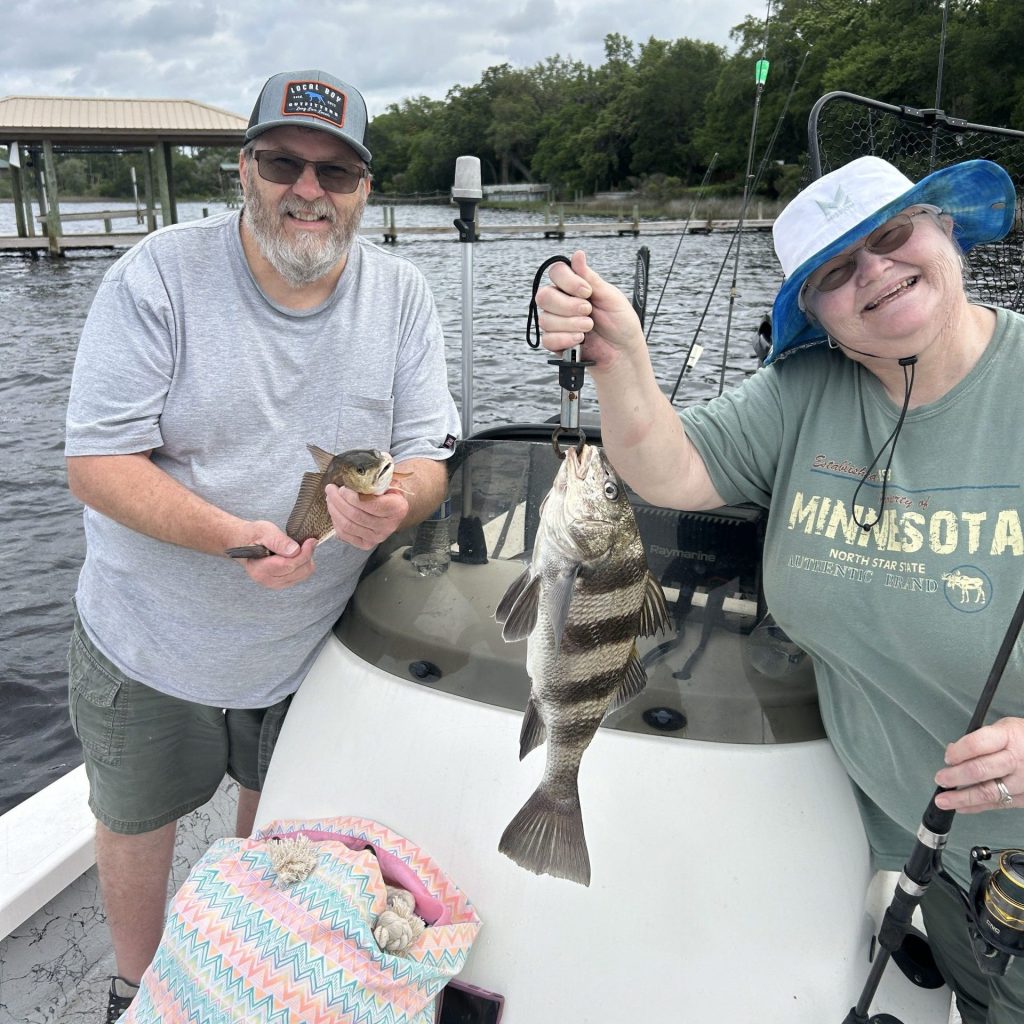
Sheepshead don’t clear out when spring arrives. They hold on their winter structure through most of April, concentrating around bridge pilings, dock supports, and oyster bar edges before that bite thins out heading into summer. Adding them to the target list on a spring charter gives guests a technical, different bite than the live-bait sight-fishing happening out on the flats.
Catching them takes a patient, specific presentation. Sheepshead feed on barnacles and crustaceans attached to structure and can be picky about bait placement and timing, which is exactly what makes them satisfying to experienced anglers, and they’re a good eating fish besides. A morning that touches trout, redfish, flounder, and sheepshead in one outing is a realistic outcome in March and April.
What to Expect on a Spring Trip
- Best window: dawn to mid-morning, before the sun pushes fish off the flats and toward structure.
- Trigger temperature: the upper 60s to low 70s is when the shift from winter to spring patterns kicks in.
- Multi-species days: trout, redfish, flounder, and sheepshead can all show up in a single outing.
- Trip length: a 4-hour half-day inshore charter fits neatly into that dawn-to-midmorning window for most groups.
- Included at the dock: professional fish cleaning and bagging on every charter we run.
- Launch flexibility: Navarre Beach, Pensacola, Gulf Breeze, or Fort Walton Beach, whichever gives the better conditions that morning.
Why Spring Fills Our Calendar Faster Than Any Other Season
Spring pairs active multi-species fishing with some of the most stable weather of the year. The afternoon storm pattern that builds across the coast from June onward is mostly absent in March and April, which means more predictable trip conditions and easier mornings for guests who aren’t used to Florida summer heat. For families, couples, and experienced anglers who want variety without the summer conditions, spring is genuinely hard to beat.
Every spring charter we run launches from one of four cities: Navarre Beach, Pensacola, Gulf Breeze, or Fort Walton Beach. Working knowledge of Santa Rosa Sound, Pensacola Bay, Blackwater Bay, and Choctawhatchee Bay lets us move when conditions in one area aren’t ideal and find productive water in a different system instead. Spring conditions shift day to day, and having the flexibility to adjust the launch point and the target water based on that morning is a real part of how we keep guests on fish through this stretch.
Spring Fishing FAQ
What’s the best time of day to fish in spring?
Early. Trout and redfish both feed most actively in low light and during the first two to three hours of the morning, before the sun climbs and pushes fish toward structure and deeper edges. Starting at or near first light gives a trip the best shot at consistent numbers before the bite slows around midday.
Can one trip realistically catch more than one species?
Yes, and it’s common in spring specifically. A typical outing can move from trout on the grass flats to redfish along an oyster bar, then to flounder at a creek mouth or sheepshead on a bridge piling as the tide and time of day change, all in one morning.
How does spring fishing compare to summer near Navarre Beach?
Spring trades some of summer’s heat and afternoon storms for cooler mornings and a shift in fish behavior: trout and redfish move onto shallow flats they’ll avoid once summer water temperatures climb, and sheepshead are still catchable before their bite thins out for the season.
Is sheepshead worth targeting on a spring trip?
Yes, through most of April. They hold on bridge pilings, dock supports, and oyster bars, and reward a patient, specific presentation. It’s a different style of fishing than the sight-casting happening on the flats, which is part of why guests like adding it to a multi-species day.
Spring books quickly across our Navarre Beach, Pensacola, Gulf Breeze, and Fort Walton Beach launches. Reserve a private charter, and we’ll build the morning around whatever’s biting when you go.
Related Topics: